Ideas & advice
Setting up a makeup vanity: the light, the mirror and the chair
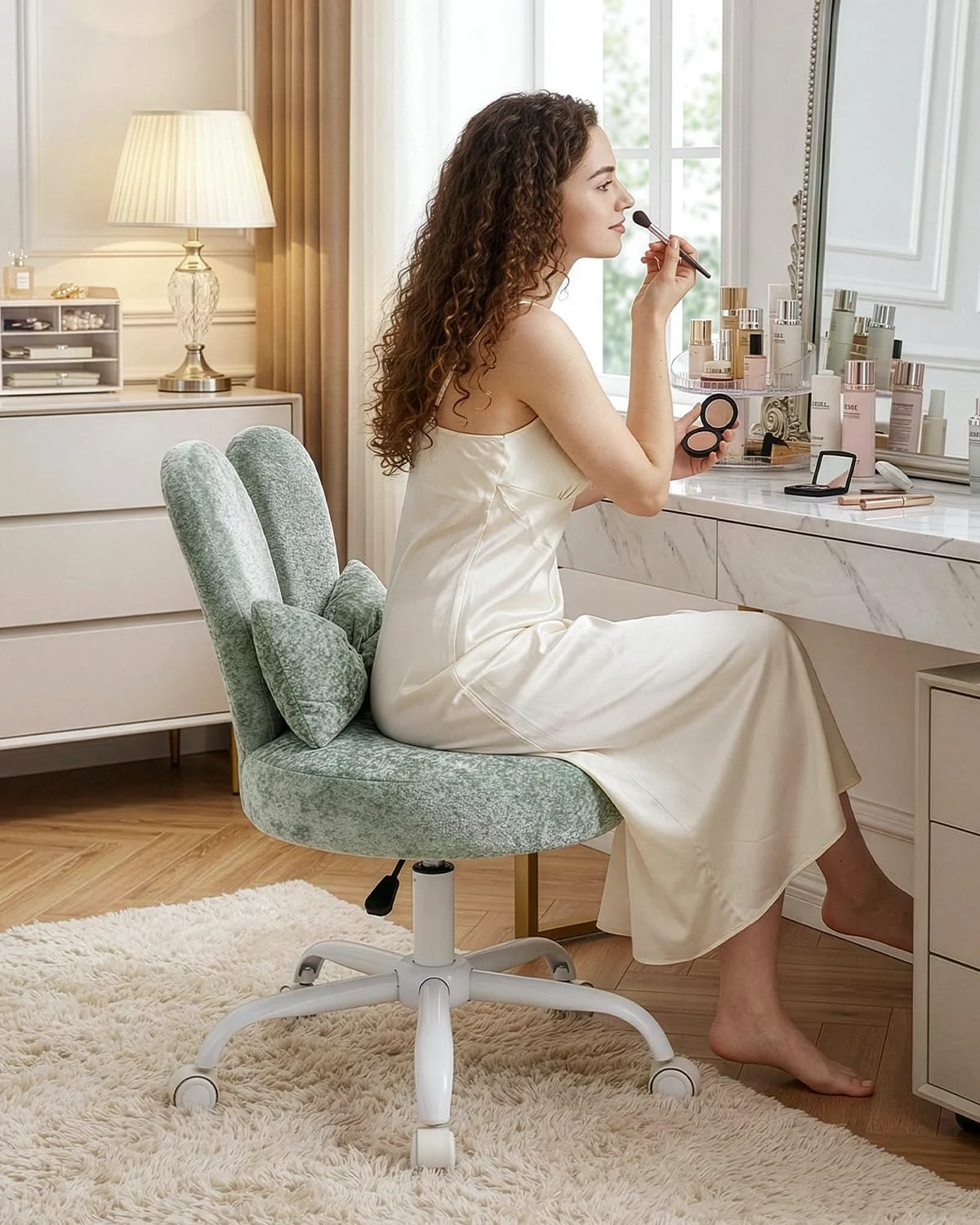
Seven in the morning under the ceiling light
Seven in the morning and the ceiling light makes deep shadows under your brows and along the nose. You lean in, trying to see the details, and the overhead bulb is making the work harder. The scene is familiar to anyone who has used a single light above a room to apply makeup. Bright from above, yet flat where you need definition. It is worth noticing because the right light changes what you see.
A vanity moves the light forward, closer to your face, and reduces those harsh shadows. A lighted mirror puts the light in front of your eyes rather than above them. That shift makes the areas under the brows and around the eyes easier to judge. Small changes in direction and intensity alter perception a lot when you are matching tones and blending.
Where the vanity goes: window, outlet, and small gaps
Start by looking at the space you have. Natural window light is useful if you can face it, but the morning sun moves fast and might wash out details. A lighted mirror helps even when the window is nearby because it puts steady light at eye level.
Place the vanity near an electrical outlet to avoid long cords across the floor. If you only have a narrow dressing corner, consider fitting the desk into the gap between the bed and the wall. Measure the wall width and clear the area so drawers and chair can move freely. Think about how the door swings and whether you will need a little more room for a rolling chair.
The light: why in front of the face and how to use three colors
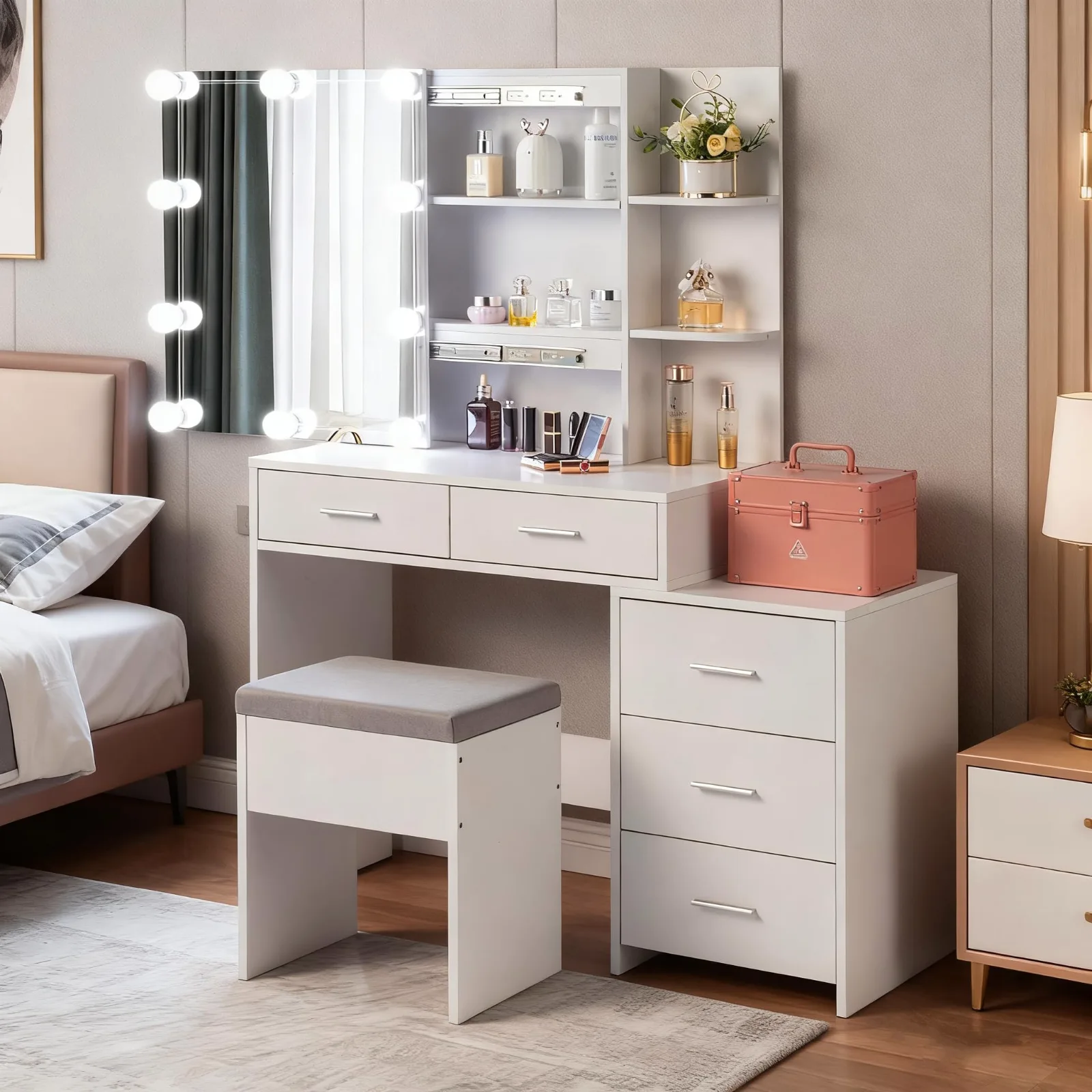
Light that falls from the front at roughly eye level prevents heavy shadowing under brows and along the nose. This arrangement produces a more even look across facial planes. Our lighted mirrors usually switch between warm, neutral, and daylight tones, and some dim.
Warm light is flattering for evening looks and softer tones. Neutral is a middle ground for general purposes. Daylight comes closest to outdoor light and is the one to check before heading out. If your mirror can dim, lower intensity in the morning can help when the sun is bright in your room. Try each color in real outfits to see which shows makeup as you expect.
The mirror: sliding, flip-up, and framed styles and the space each needs
A sliding mirror moves along the frame instead of swinging outward. It needs clear space to the side of the desk, so check the wall on that side before you choose it.
Flip-up mirrors give a compact surface but ask for head room above the desk so the panel clears shelves or low ceilings. Measure upward before selecting that style. A fixed mirror framed by bulbs sits within a set footprint and needs only the clearance behind the desk for the cord. Each mirror type creates different demands on the surrounding area, so match the mirror to the actual space rather than an imagined layout.
| Vanity | Width | Depth | Height | From |
|---|---|---|---|---|
| Two-in-One Vanity Desk with Flip-Up Mirror | 32.1" | 16.1" | 29.3" | $79.99 |
| Vanity Desk with Lighted Sliding Mirror | 43.3" | 15.7" | 55.1" | $99.99 |
| Lighted Vanity Desk with Sliding Mirror | 43.3" | 15.7" | 55.1" | $109.99 |
| Six-Drawer Vanity with Sliding Mirror | 39.4" | 17.7" | 55.1" | $119.99 |
| Fluted Makeup Vanity with Lighted Mirror | 33.5" | 15.7" | 29.5" | $139.99 |
| Six-Drawer Vanity Desk | 39.4" | 17.7" | 55.1" | $149.99 |
| Eight-Drawer Makeup Vanity with Three Light Modes | 31.5" | 15.7" | 55.1" | $179.99 |
| Fluted Vanity Desk with Five Drawers | 46.5" | 15.7" | 29.5" | $199.99 |
| Fluted Vanity Desk with Seven Drawers and Charging Station | 43.3" | 15.7" | 29.5" | $219.99 |
| Large Makeup Vanity with Glass Top and Charging Station | 47.2" | 15.7" | 55.1" | $229.99 |
The chair: height, backs, and wheels
A chair that places the seat about 12 inches below the desktop gives room for your knees and keeps you close to the mirror. Sit in several chairs to test the clearance and posture. A higher seat will bring your face closer to the light, and a lower seat will tilt your head differently.
Backs provide support and a place to rest between steps of a routine. Upholstered seats add comfort for longer use. Wheels help when you need to move the chair back quickly. If you choose a rolling chair, leave approximately 30 inches behind it so you can pull it out easily.
Storage: drawers, side shelves, jewelry cabinets, and train cases
Think about what you use every day and keep those items within reach. Drawers offer organized spaces and our vanities range from two to nine drawers. Side shelves are handy for taller items or frequently used tools, while a charging station keeps a phone or a hair tool powered at the desk.
A jewelry cabinet keeps necklaces and earrings in one place, and ours carry a full-length mirror for checking an outfit. For travel, a rolling train case keeps palettes and larger products contained and easy to pack. When planning, place heavier or fragile items low in drawers to reduce tipping and to keep fragile items protected during daily use.
Measure the gap and find the outlet before choosing the finish
Measure the gap between bed and wall, the distance to the nearest outlet, and the head room above the desk before you pick a finish. A color or wood tone is important, but the fit and function come first. Confirm that the cord reaches the plug with enough slack and that the mirror style will clear any nearby obstructions.
We suggest drawing a simple floor plan on paper and noting outlet locations, window placement, and any furniture that opens into the space. Bring those measurements when you choose a vanity so the finish matches a setup that works. Deciding the spot first saves moving a heavy desk twice.
Before you order from the Karl Home catalog, lay painter's tape on the floor at the width the room size guide gives, and live with the outline for a day.